 CONCEPTUALIZATION
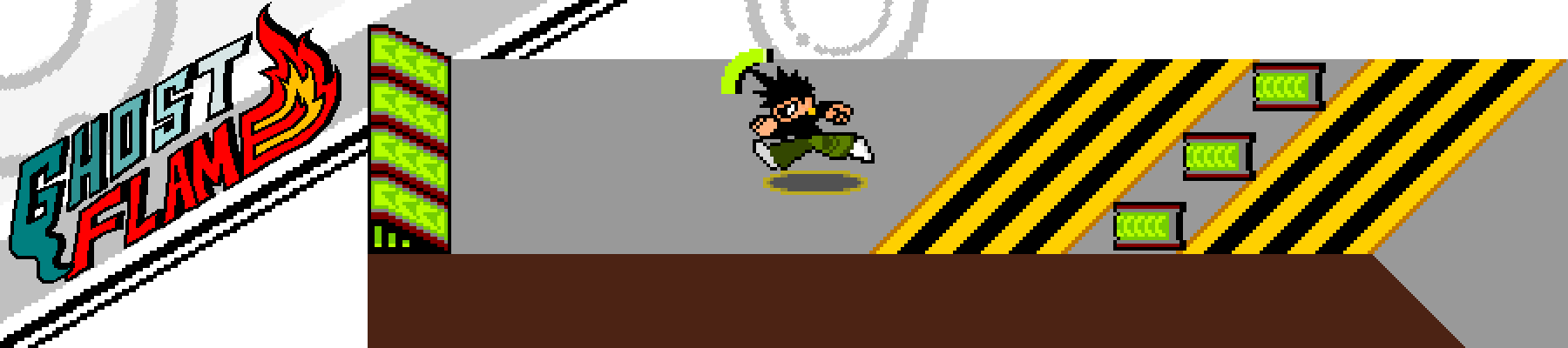
GHOSTFLAME began in December 2023 as a top down speedrunning game with only the ability to move the character and run. I decided to use the project as the base for my 2D Animation class. I ended up making moodboards, sketches, and more stylized sprites and animations. This process helped me create an industrial & cybernetic world while tackling gameplay that pushed the complexity of my movement systems further.
INITIAL DEVELOPMENTLater I continued to push myself outside of my comfort zone, implementing systems such as multi-layered enemy targeting, momentum centered physics, and custom 3D movement and collision in a top down 2D perspective. With GhostFlame I am pushing to reward a high level of growth and mastery with its high-speed gameplay, various inter-linked movement mechanics, branching levels with proportionally challenging and time-saving shortcuts, and a ranking system that rewards player's who push the game's movement mechanics to their limits.
SKETCHING PROCESSSketches originated as character, enemy, and world design for my 2D Animation class. These drawings and sketches continued far outside of the class as I became enveloped in the process of creating this cybernetic world with a street art aesthetic. Before I knew it I was planning the realization of this world. The prototype I had been working on fit perfectly as the focus on high speed traversal matched the gritty and energetic tones I was reaching for. My sketches pivoted toward planning game structure, mechanics design, and overall all narrowing down where I wanted the game's focus to lie. Eventually I decided the main focus to be player driven progression. This conceptualized into a speed-focused combat platformer with stages focused on creative use of dynamic movement mechanics for players to carve their own path through this world.
GAME STRUCTRUEGhostFlame's structure follows a small hub area includes one main stage, two sub stages, and a bossfight. To progress to the next area the player needs a certain number of keys. The way the player is awarded these keys is dependant on their mastery of each of GHOSTFLAME's systems. Each level ranks the player based on damage taken, collected tris, and the most heavy influencer is time of completion. Completing a stage awards you one key but S-ranking a stage will award you with an extra key. The same applies for defeating bosses. This allows for non-linear progression that the speed of which is dependant on Player mastery over the game's mechanics.
REFINING IDEASOver time I cut out mechanics, environments, gimmicks, designs, etc. that don't contribute to the game's core gameplay or deviate too far from the game's main focus. From there I implement quick versions of these ideas to further decide whether it will serve a meaningful purpose to the sector of the game it relates to such as player traversal or the world's industrial theme. The goal of streamlining these ideas is to make the feeling of player driven high-speed action more impactful and digestible.
 OPTIMIZATION SYSTEM
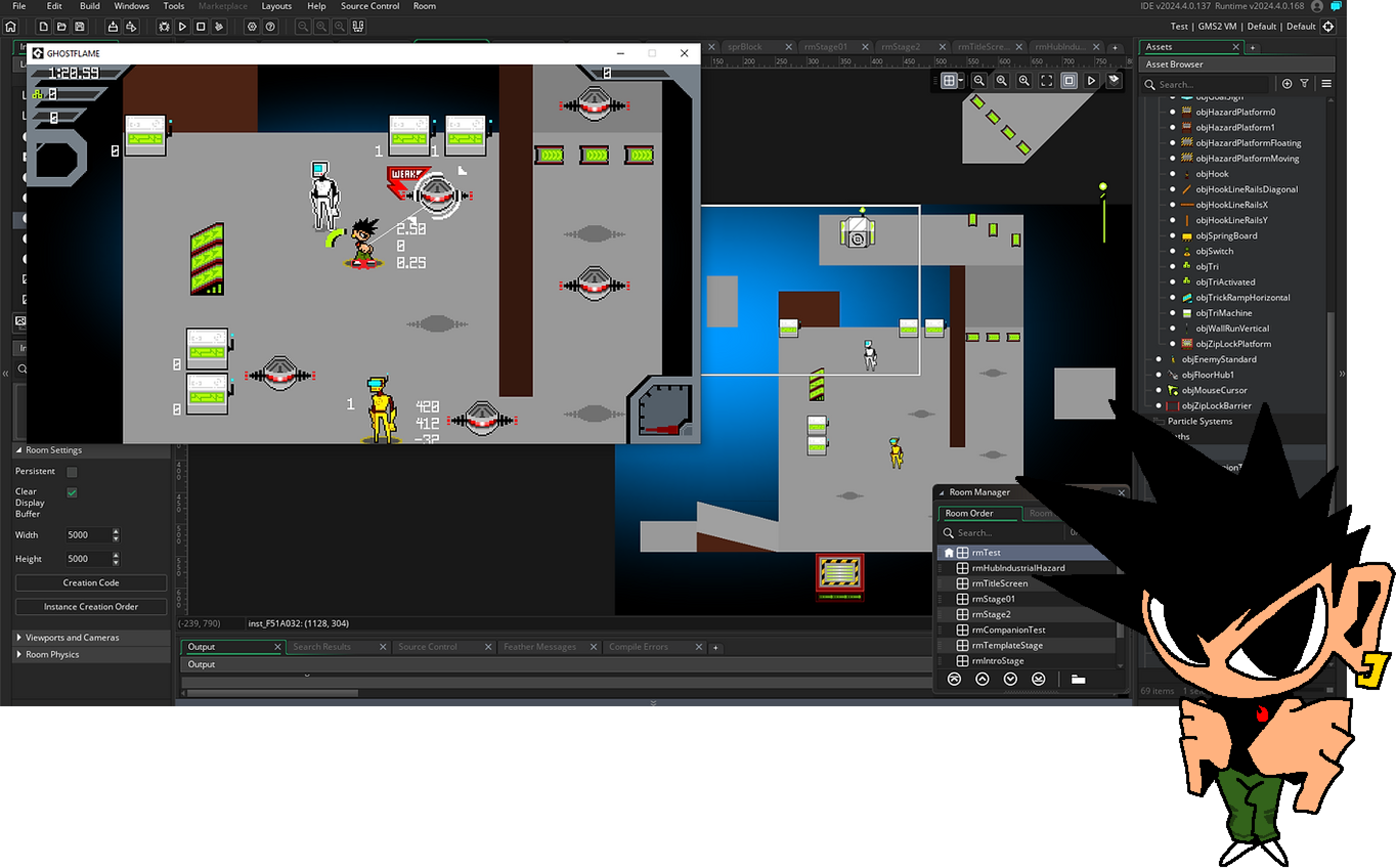
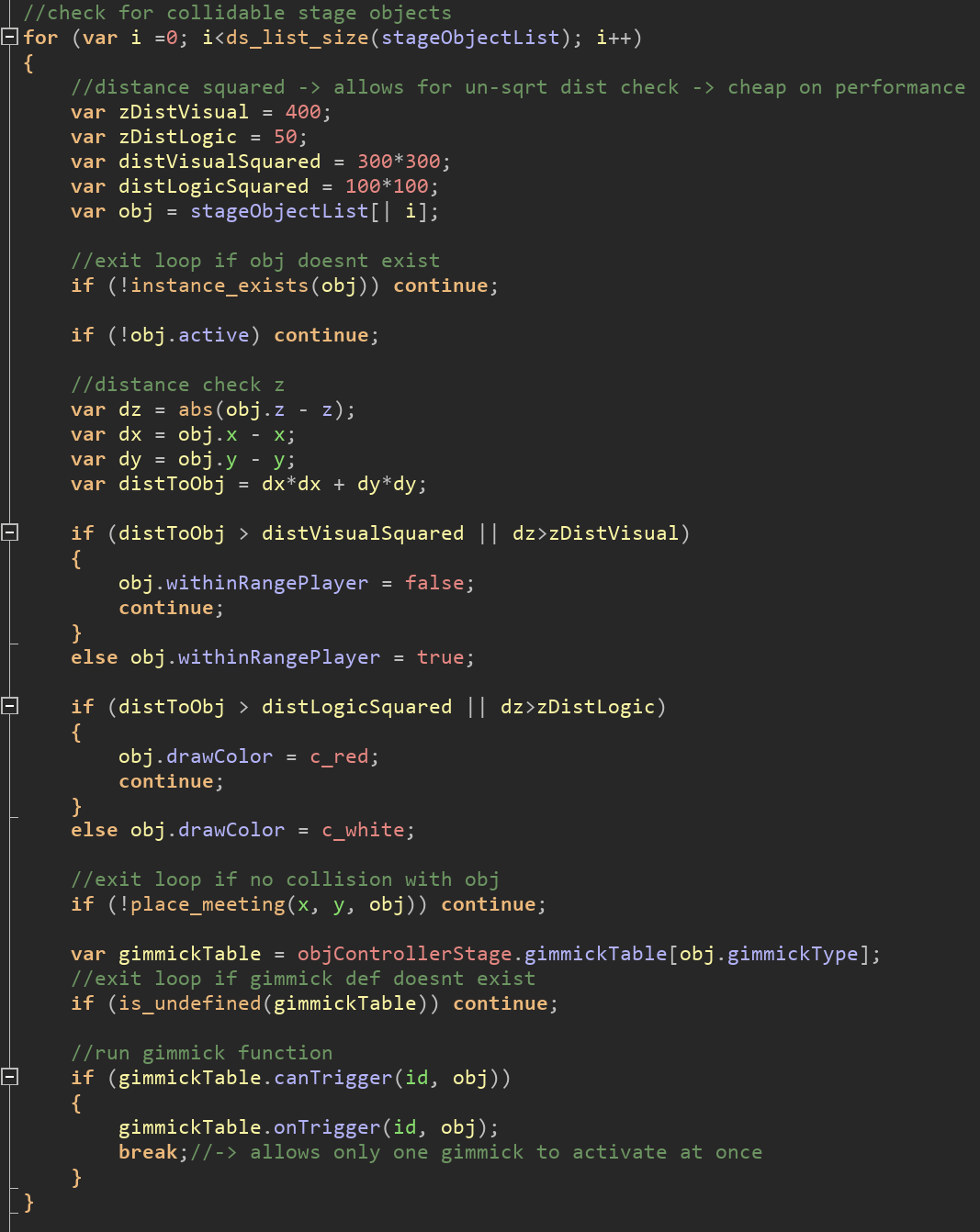
Separate visual and logic culling through a gating system that performs checks on game objects from least to most expensive, bailing when a condition isn't met. This prevents unnecessary expensive math and especially collision checks.
 BOOSTING SYSTEM
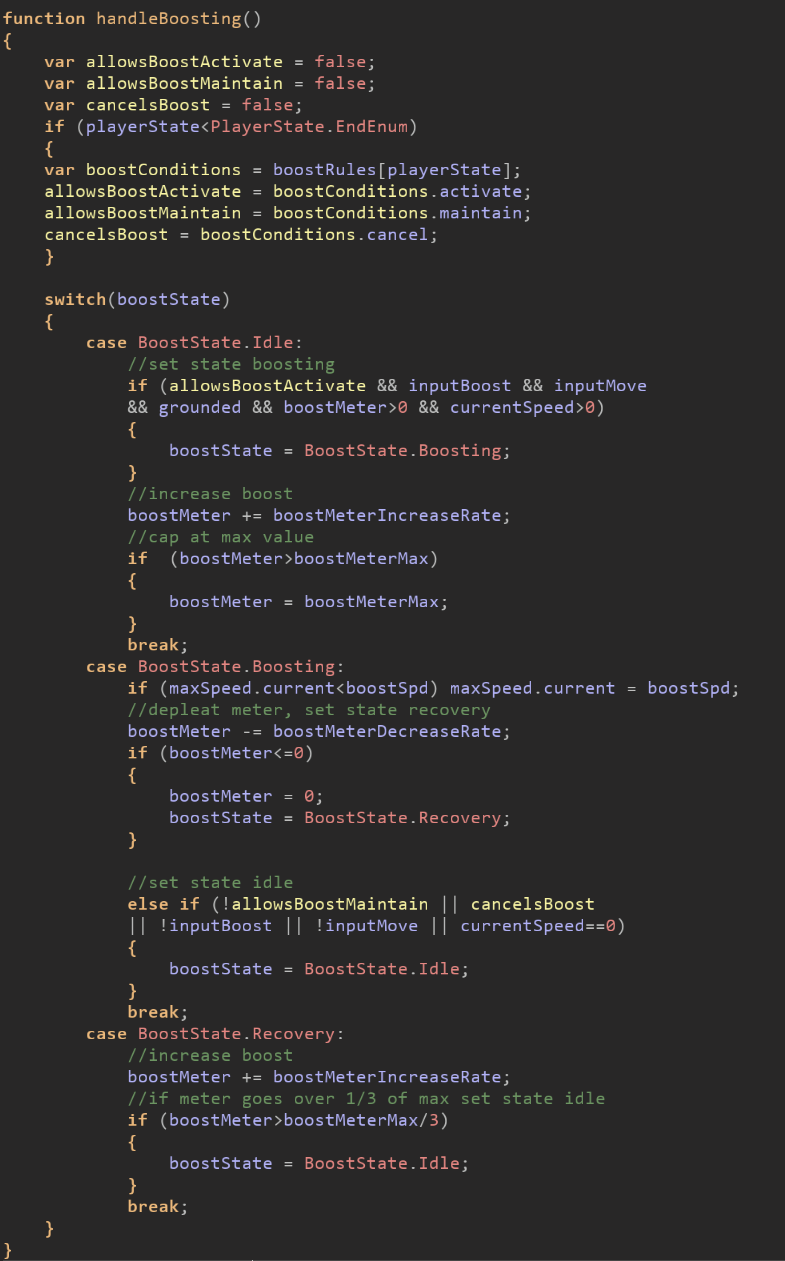
Separate from the player's state machine I engineered a boost state machine alongside a table containing definitions for each player state deciding whether to allow, maintain, and/or cancel boosting. This function handles and defines conditions for boost state switching, draining and regeneration of boost meter, and correctly adjusting the player's directional speed.
 3D in 2D MOVEMENT SYSTEM
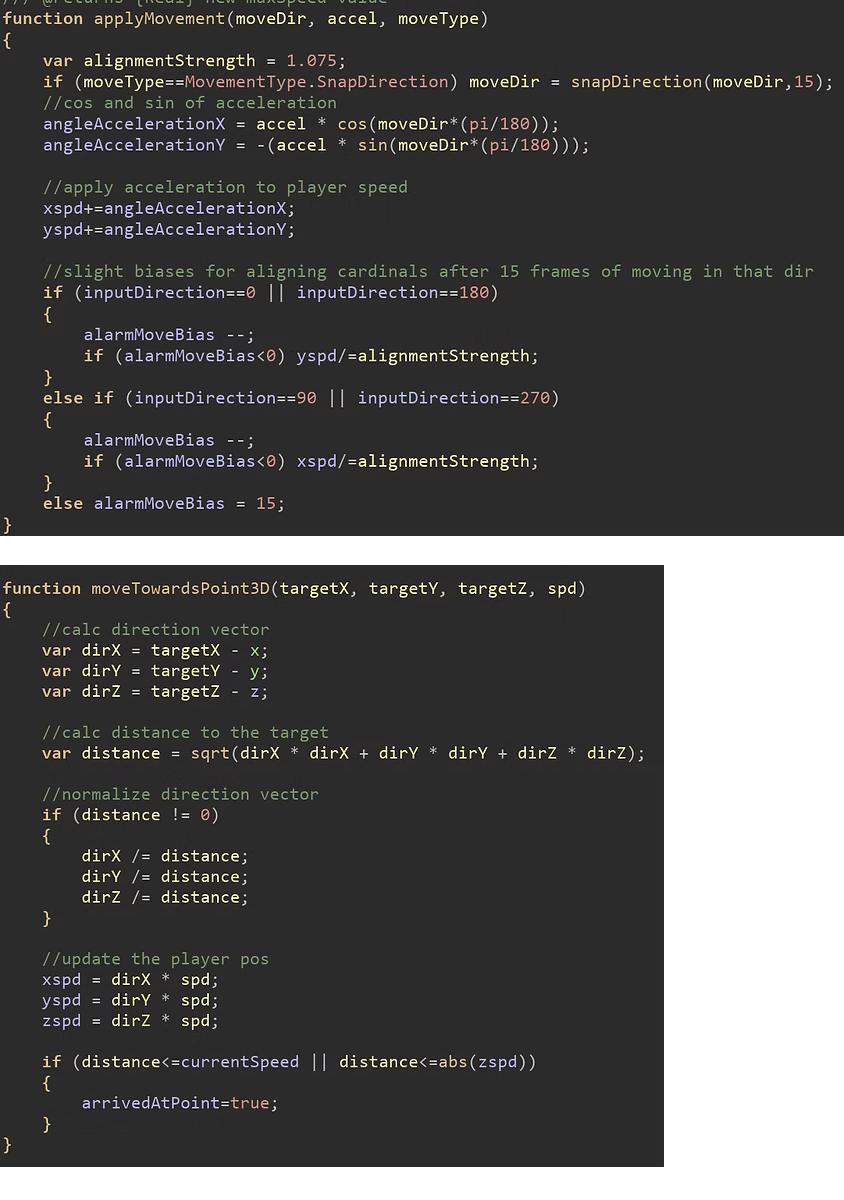
Player ground movement system supporting smooth normalized 360 degree movement, and tweak-able input direction snapping for tighter game feel and control over movement. 3D targeting function calculates the distance between 2 points using 3D math and translating to the 2D GameMaker Studio 2 engine.
 LINEAR STAGES
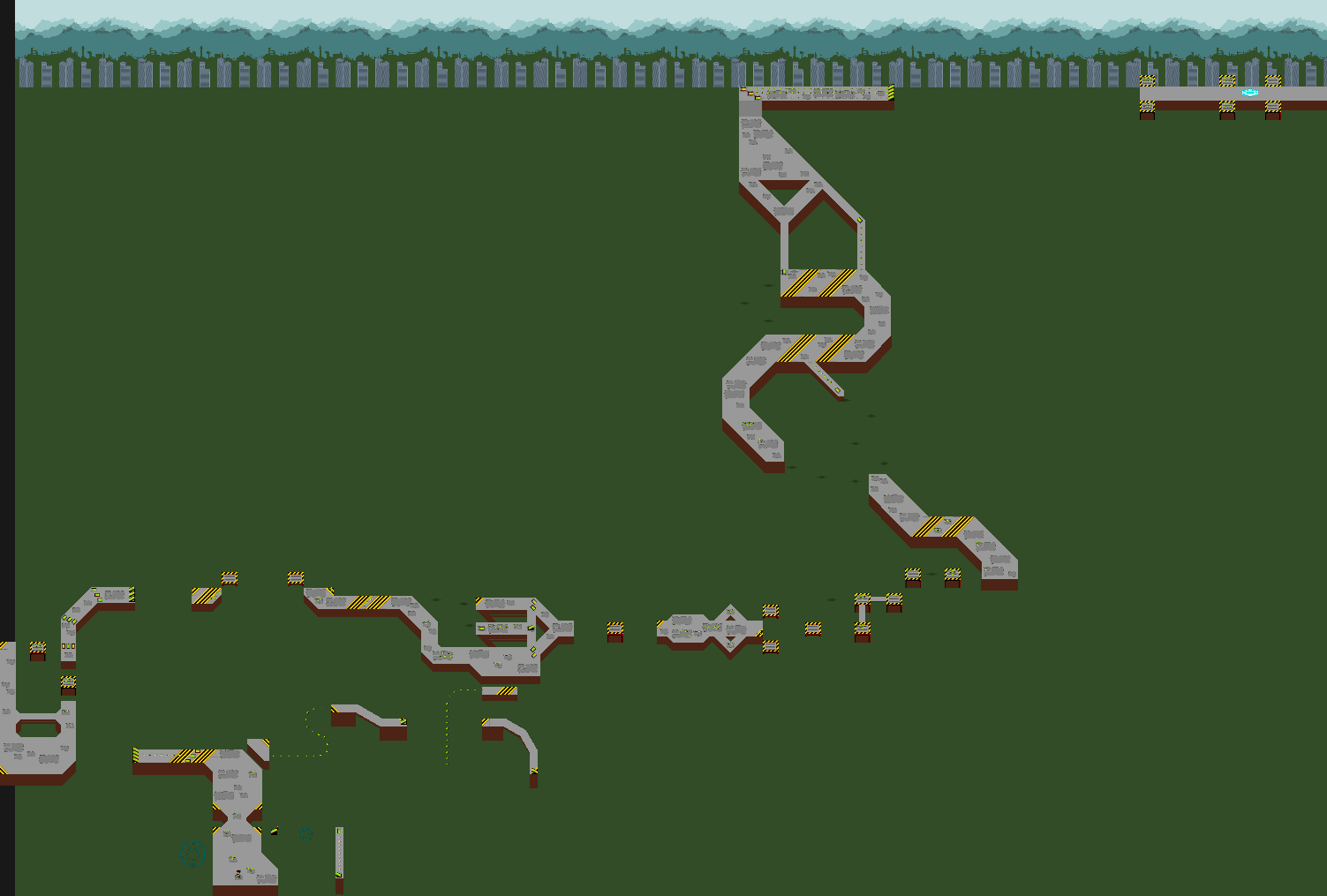
I design GhostFlame's levels to be fairly linear with various styles of branching paths that require player mastery over movement and memorization of level layout. I want a smooth run of a level to feel like a bullet tearing its way through the air until it reaches its target. I achieve this through the level gimmicks that encourage high speed play, with low skill floors and high skill ceilings.
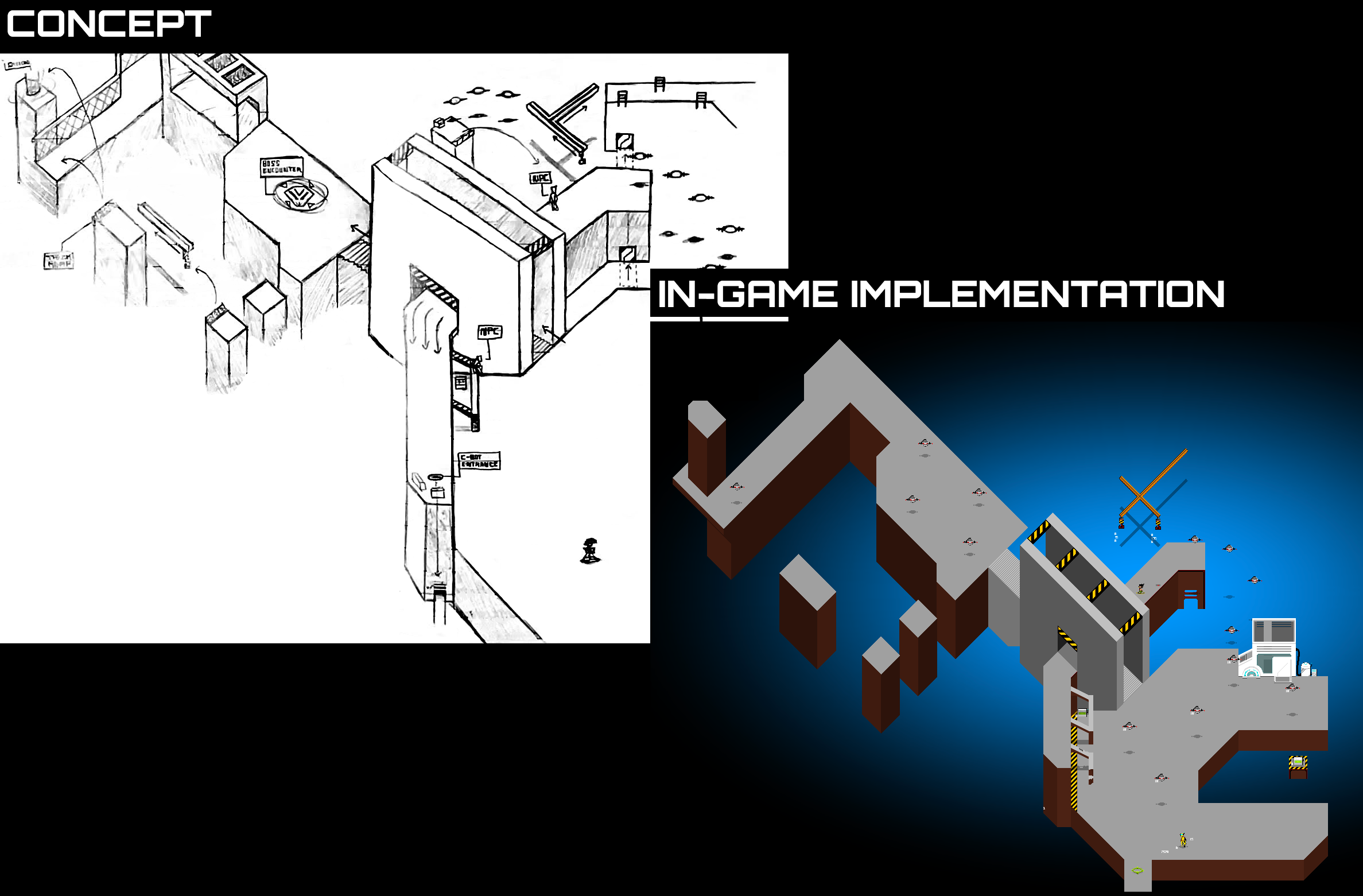
HUB STAGESHub areas serve as a space to freely run around, allowing player's to freely express their movement mechanics and get a better grasp of the charcater's locomotion in between stages. Holding every stage and boss encounter in each area, hub levels allow players to have urgency over their next objective. These spaces also allow me to create bite-sized challenges that focus on specific mechanics or gimmicks leading up to a stage's entrance, foreshadowing its focus and introducing it to players in a safe environment.
level design: stage-01
level design: hub area-01
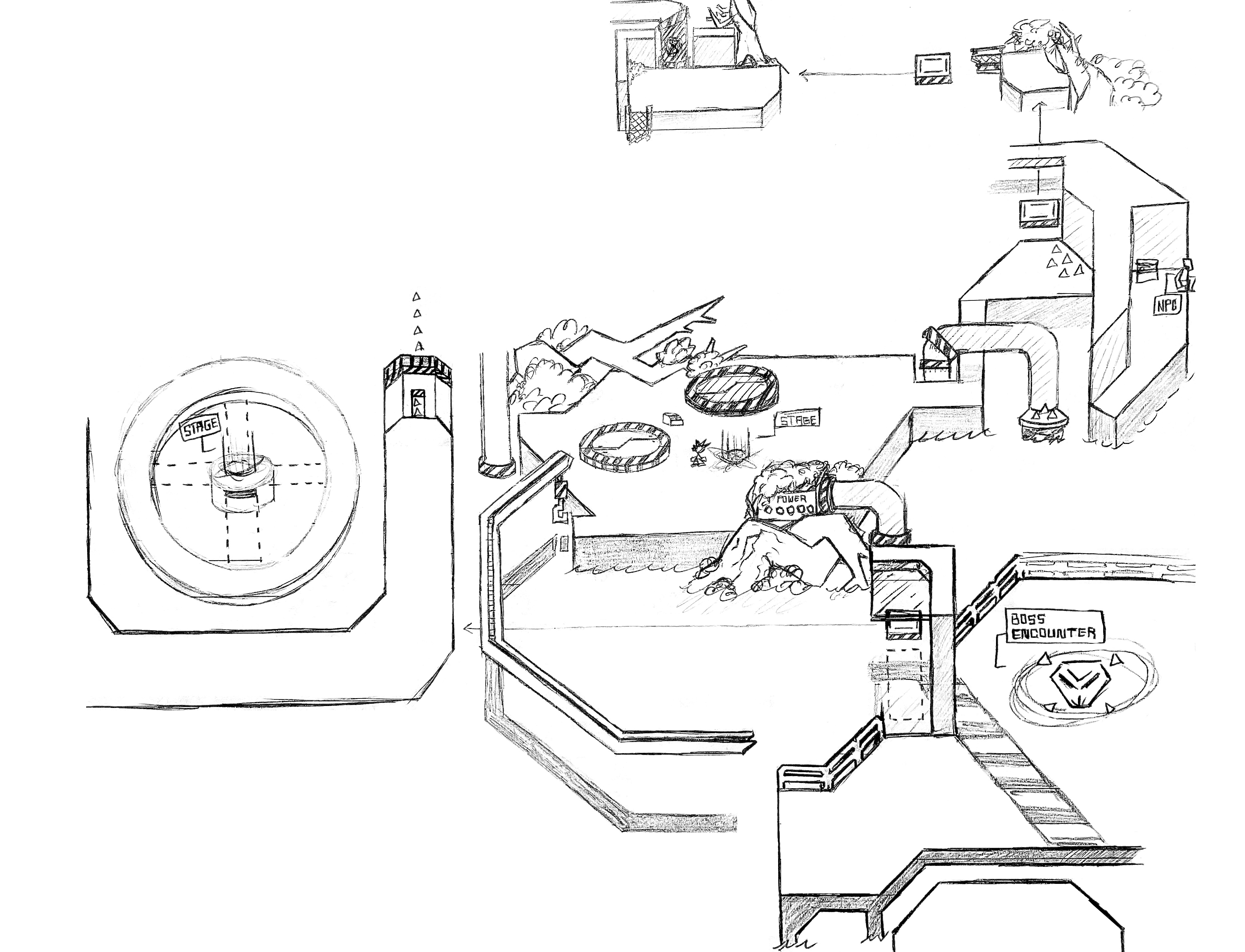
early level design: hub area-02
These are pulled from my notebook and are ideas I have both used and cut out over time. These detail environments, hub-area designs, characters, enemies, mechanics, updgrades, pseudo-code, etc. They detail many of my early through more recent ideas for the game. I tend to sketch wherever and whenever so many pages here contain multiple different ideas which is core to my process.
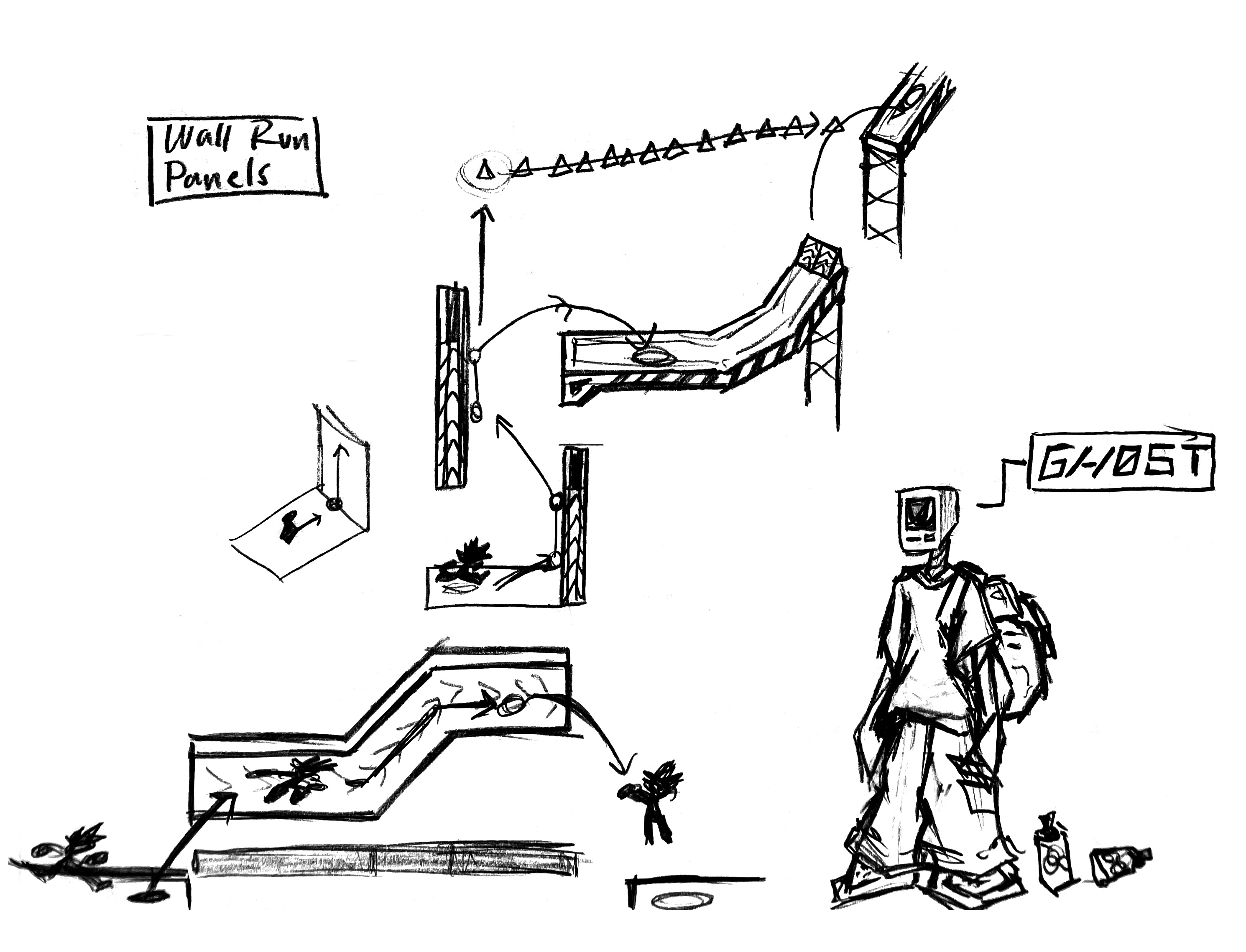
Wall Run Panel Mechanic & Character
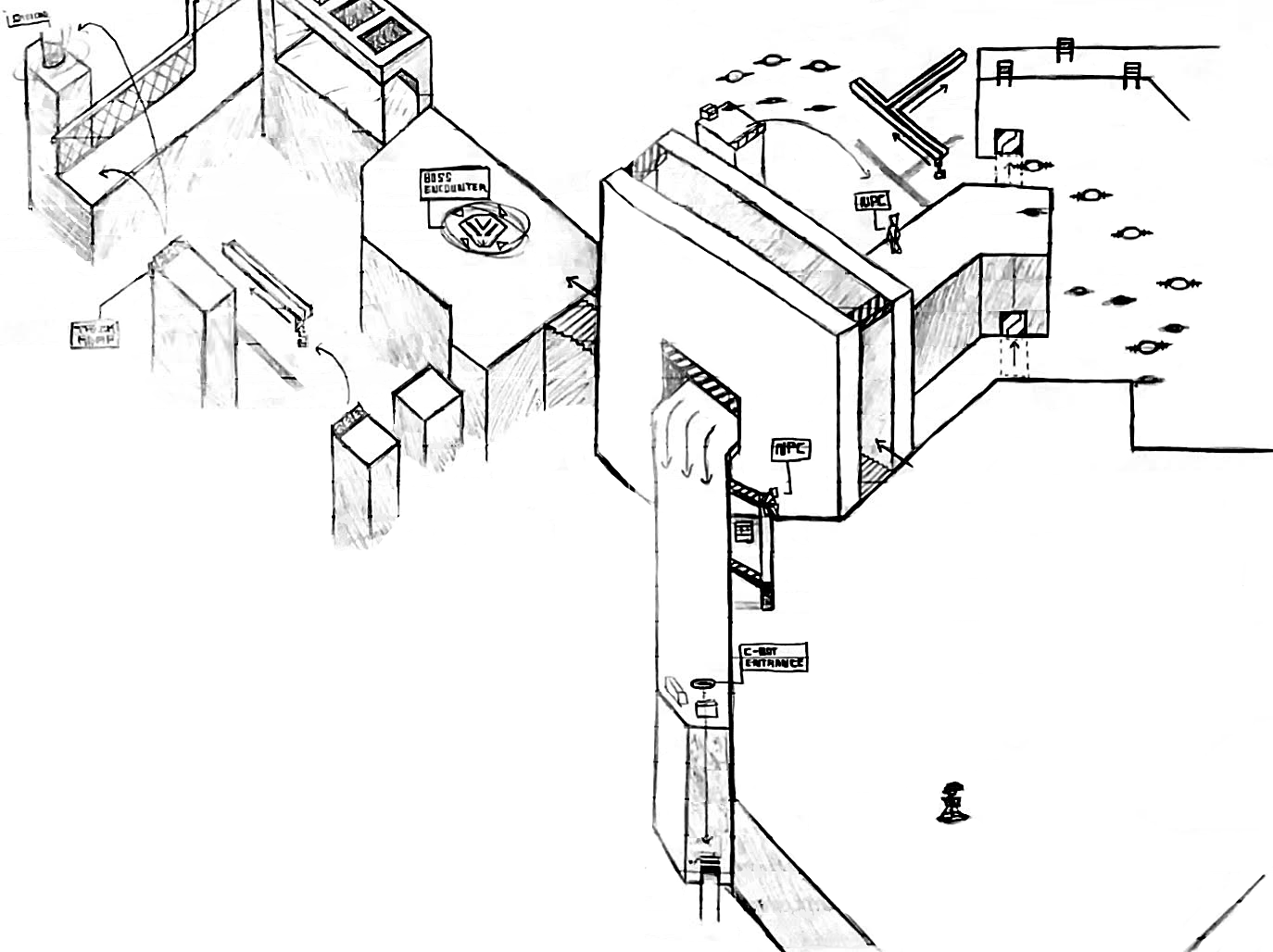
Level Design: Hub-Area 01
Level Design: Hub-Area 02
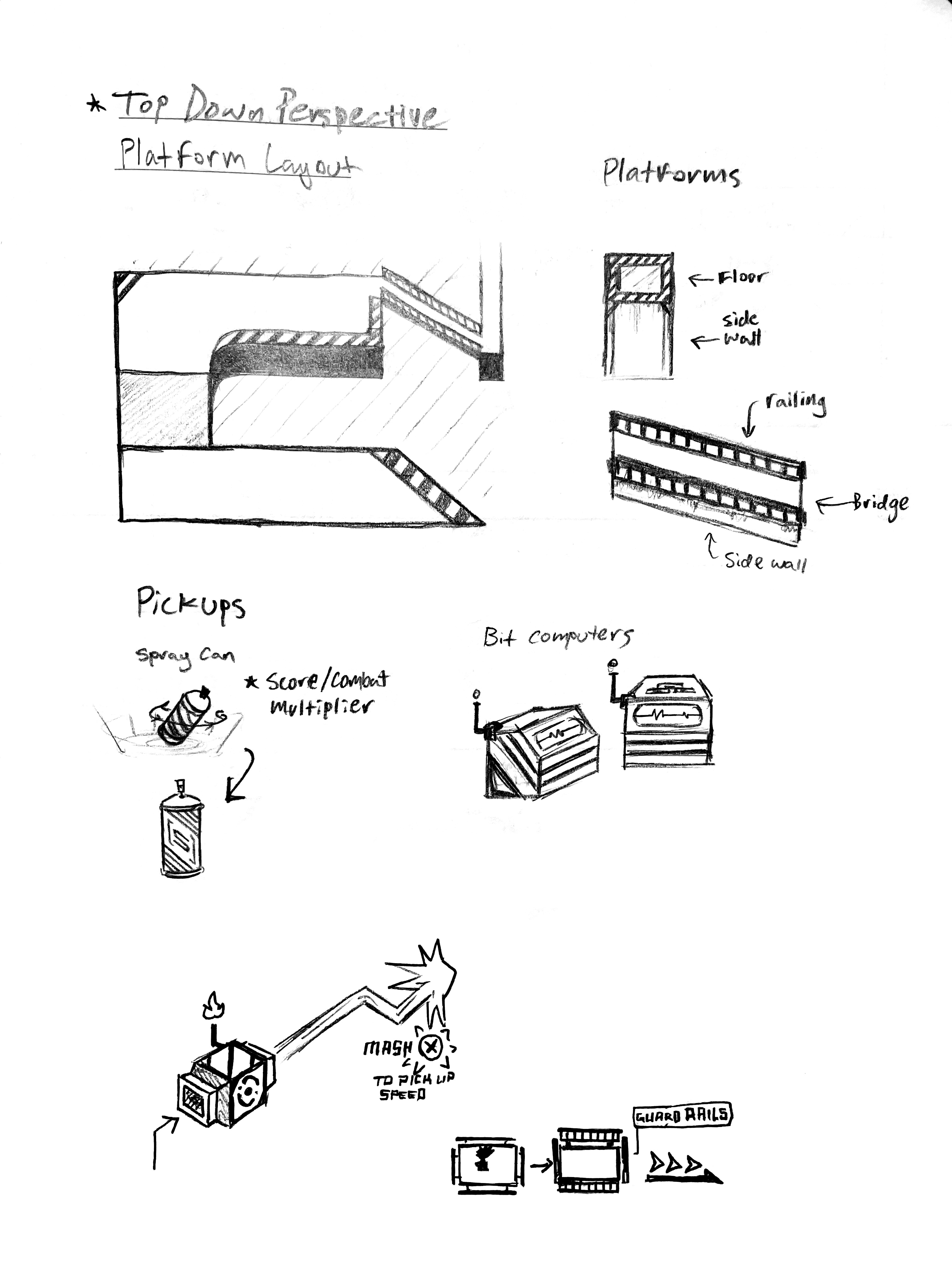
Perspective, Platforms, Gimmicks
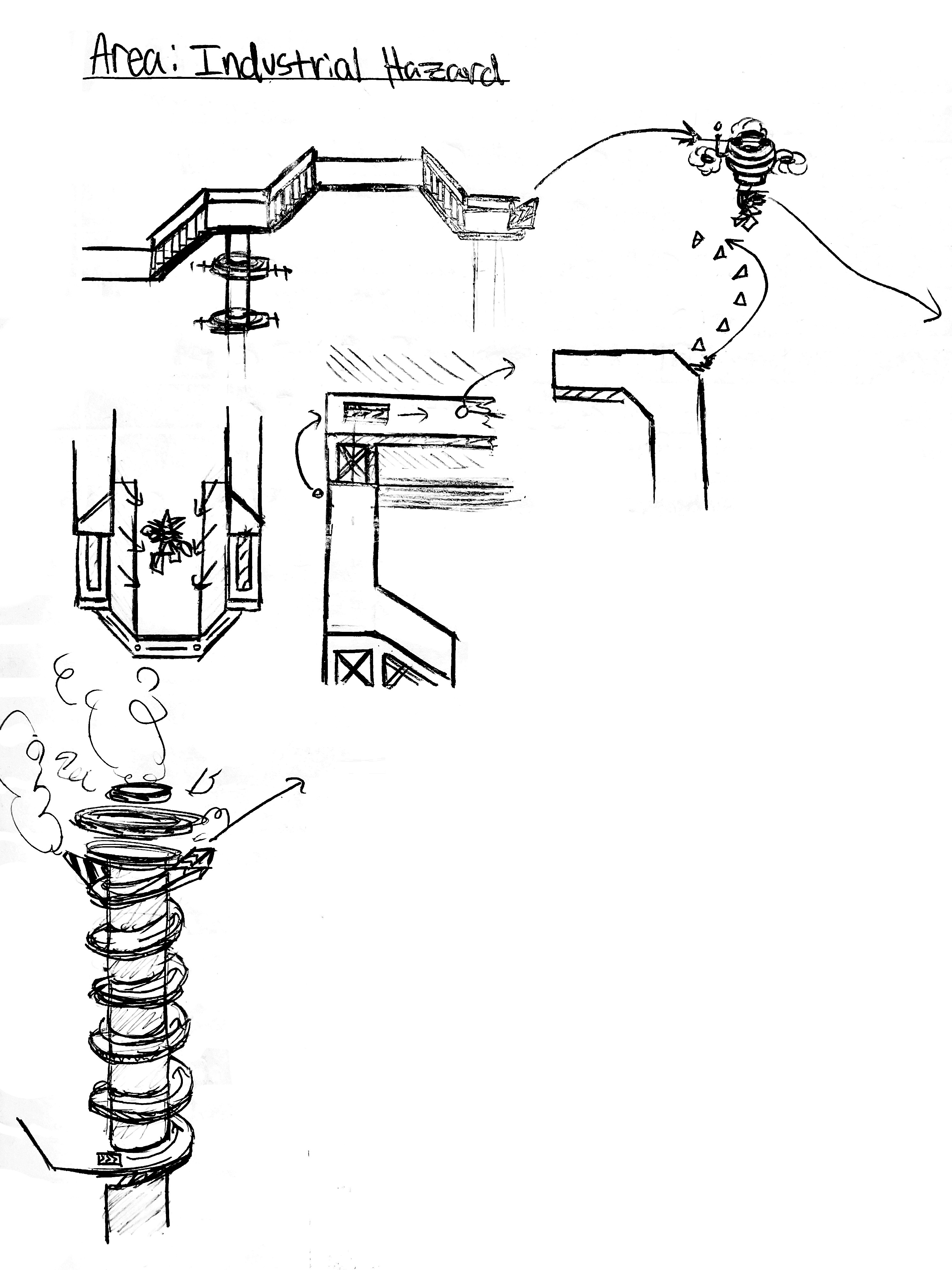
Environment Pieces: Industrial Hazard
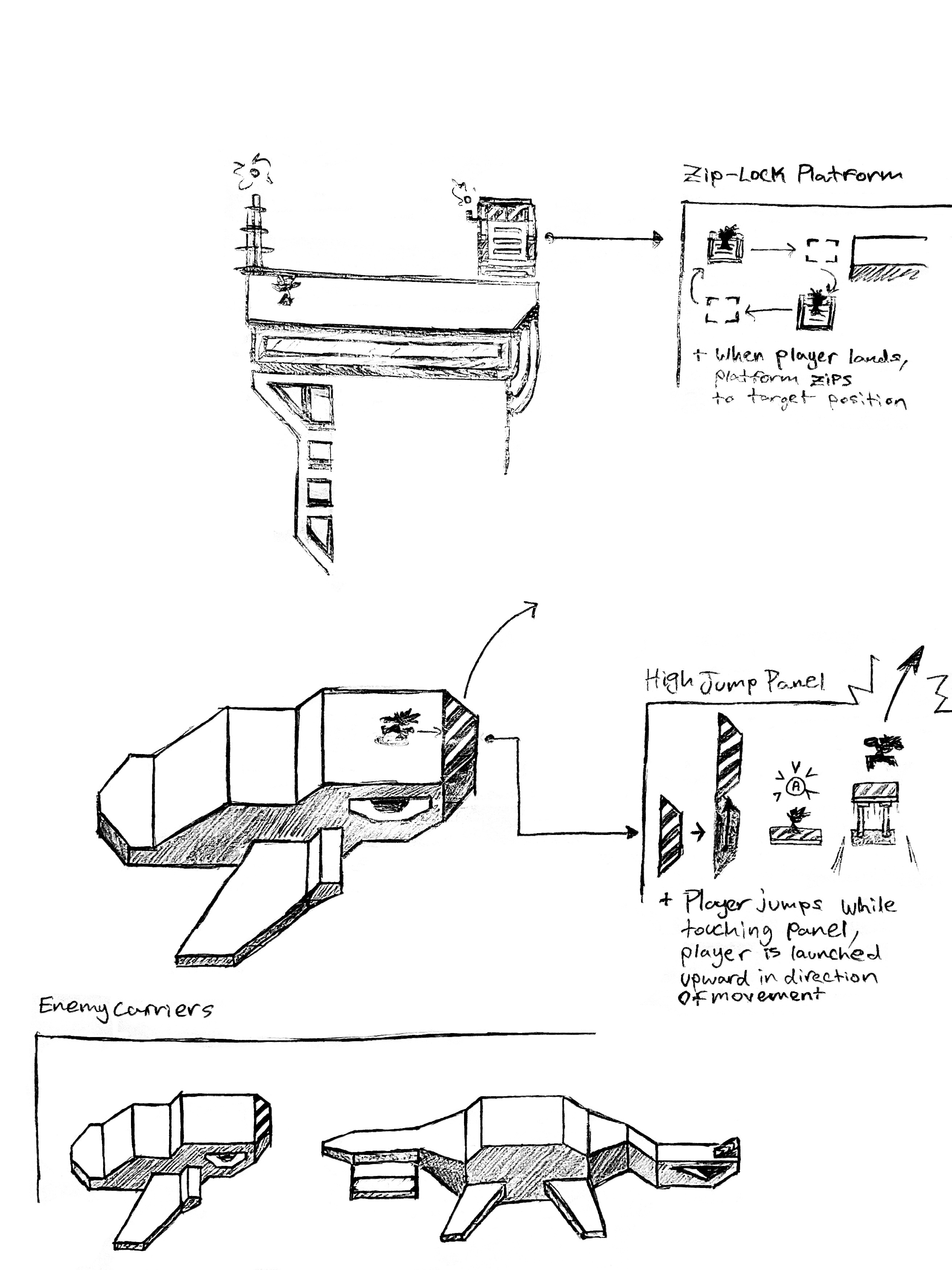
Platforms, Environment, Gimmicks
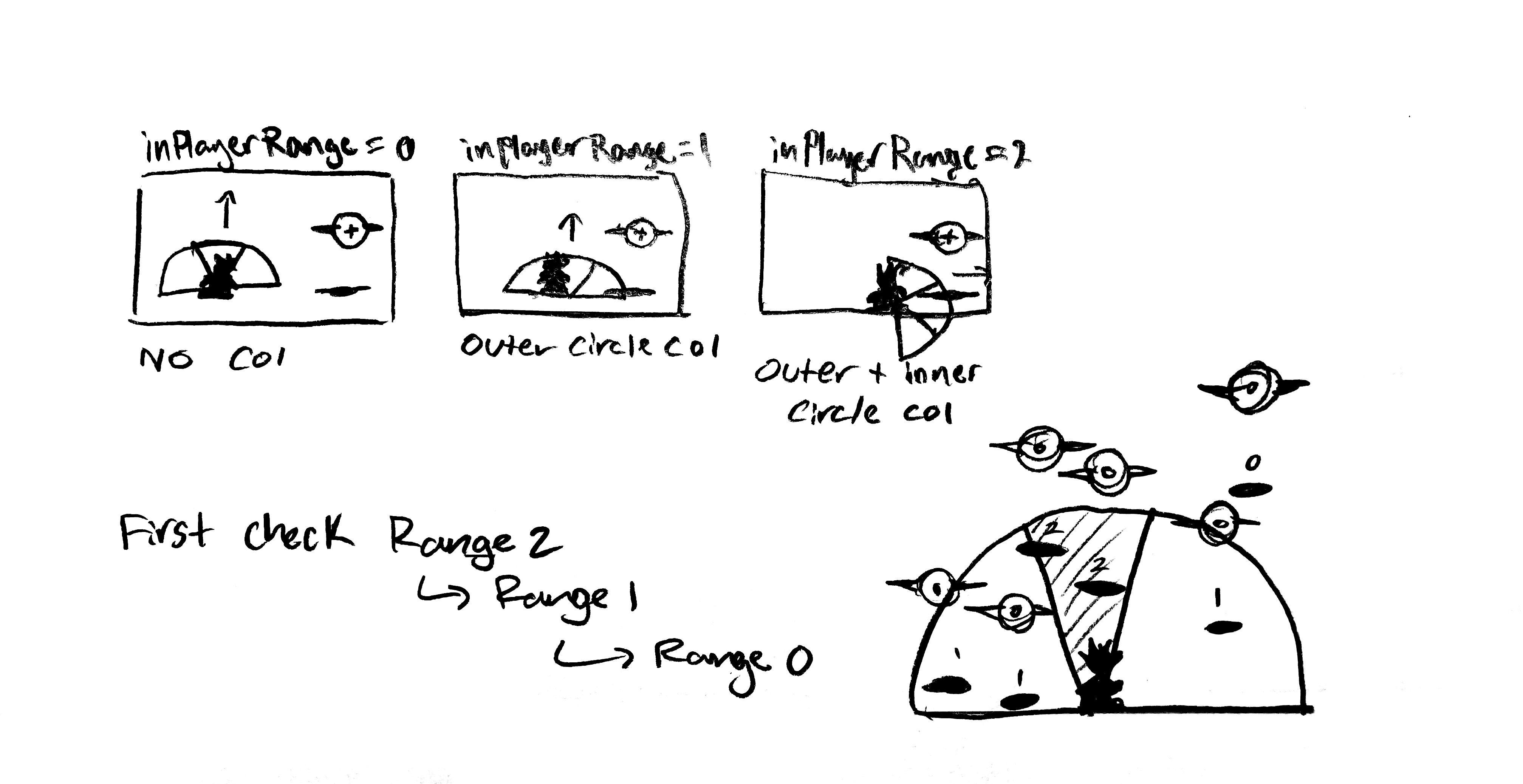
Targeting System Logic
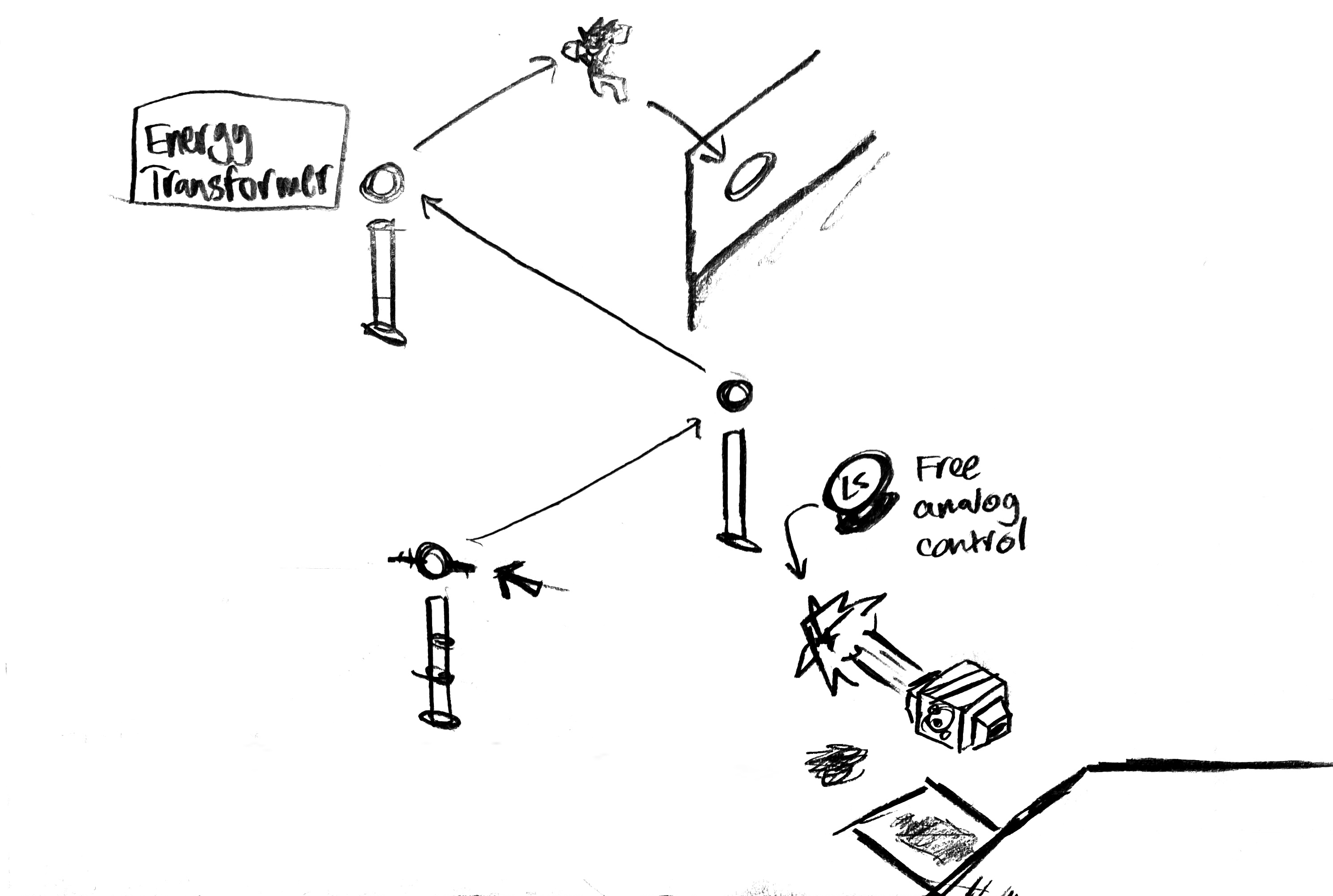
Energy Transformer Mechanic
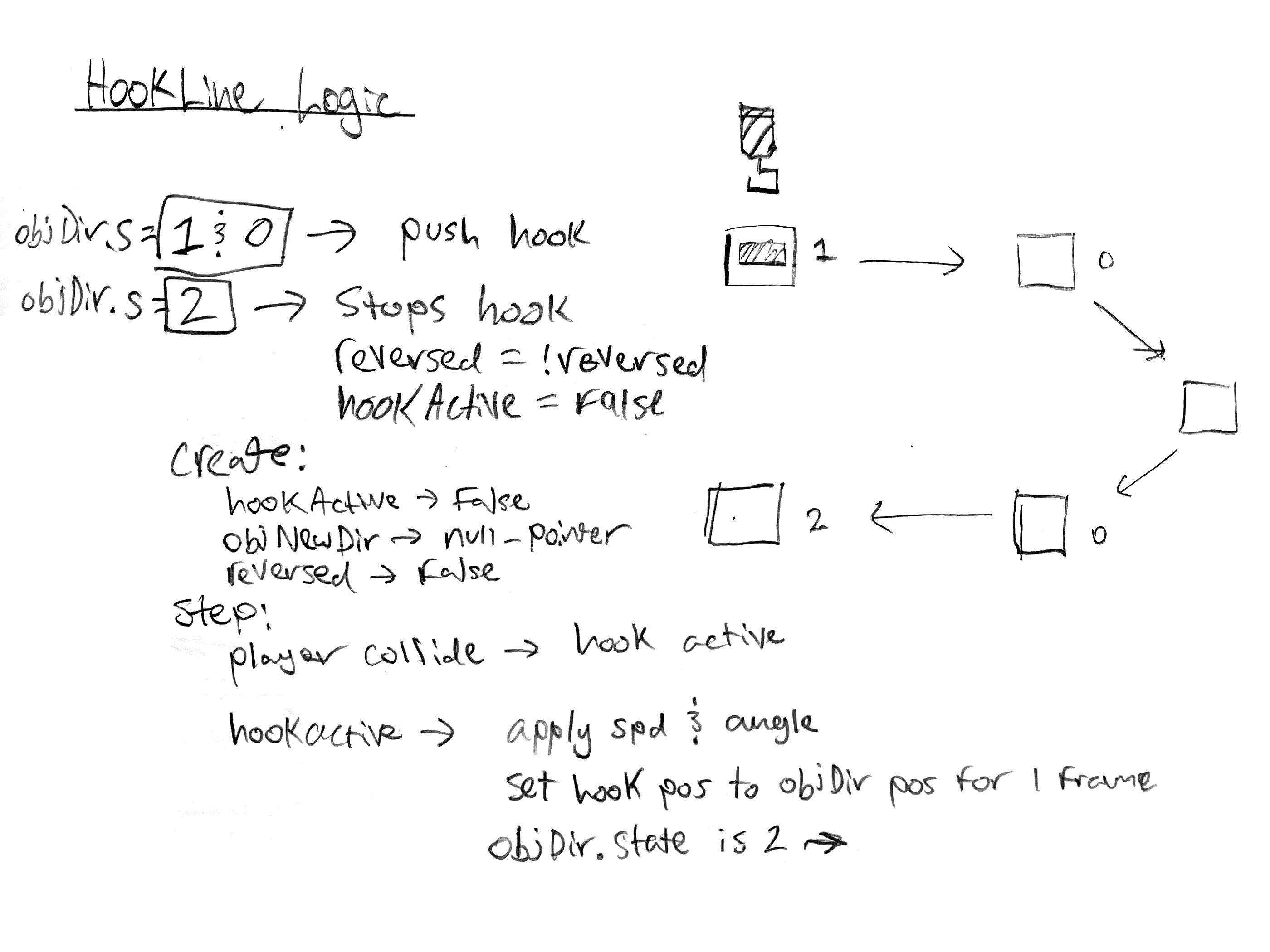
Hookline System Logic
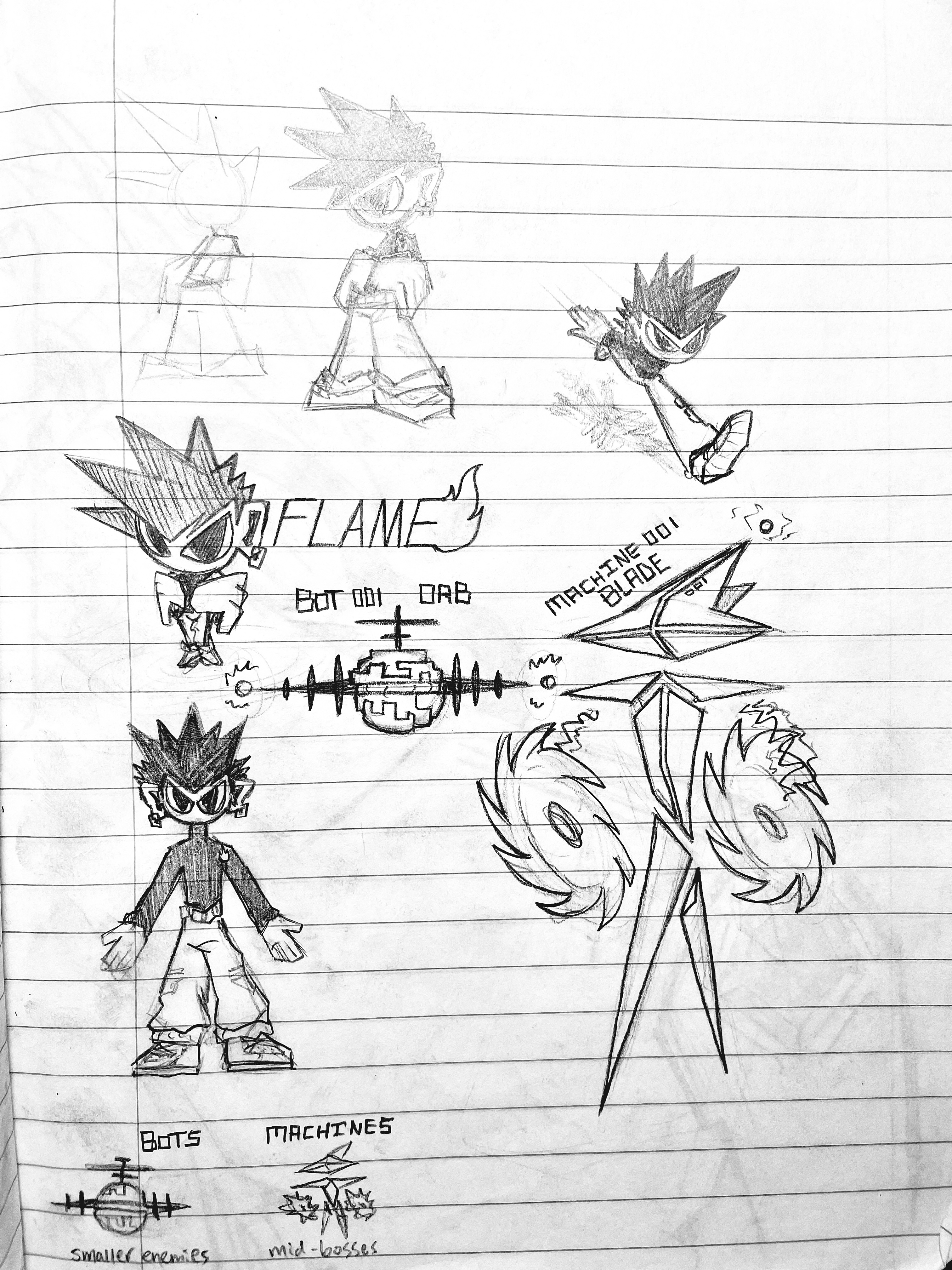
Character Sketches
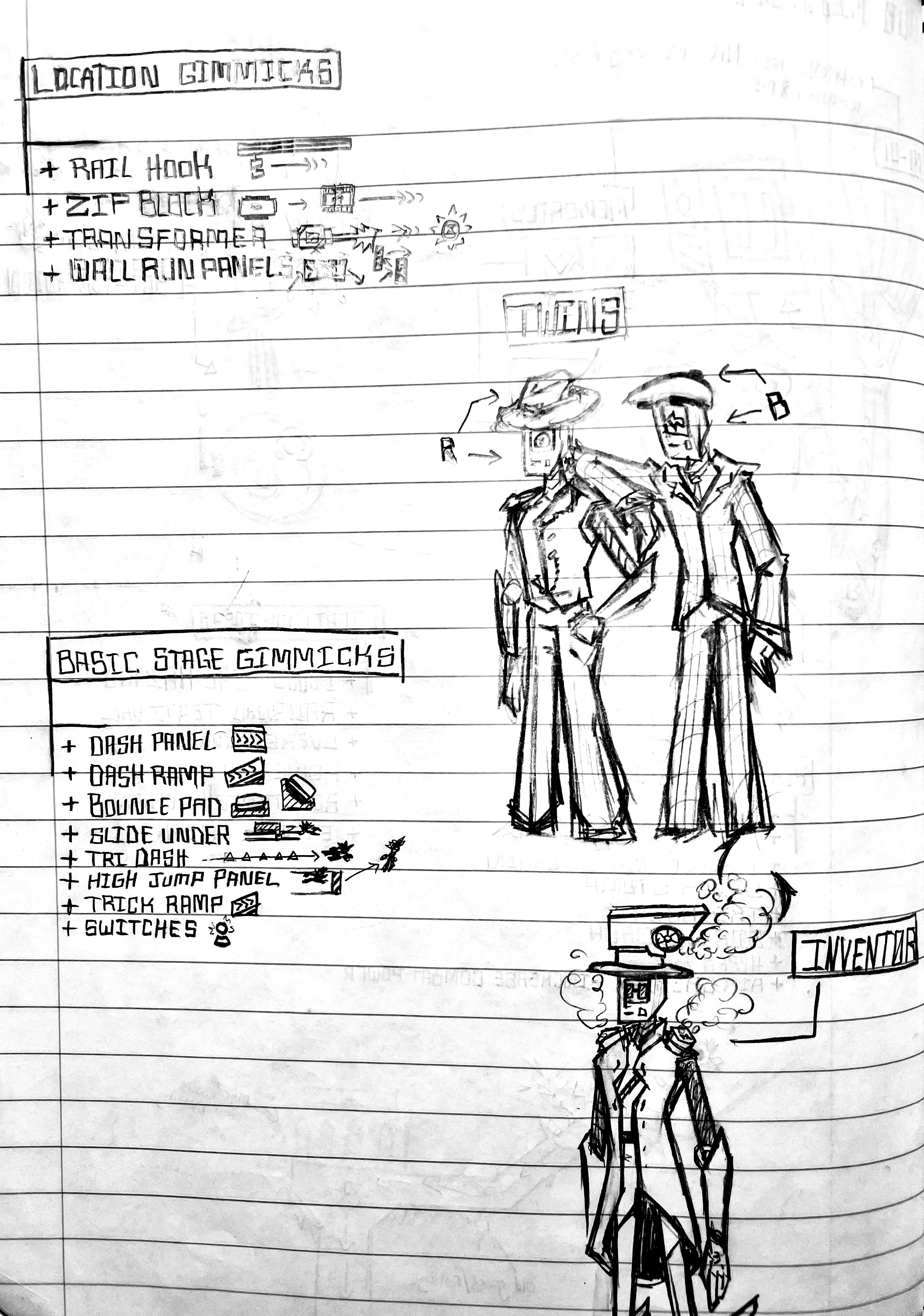
Character & Gimmick Brainstorming Sketches
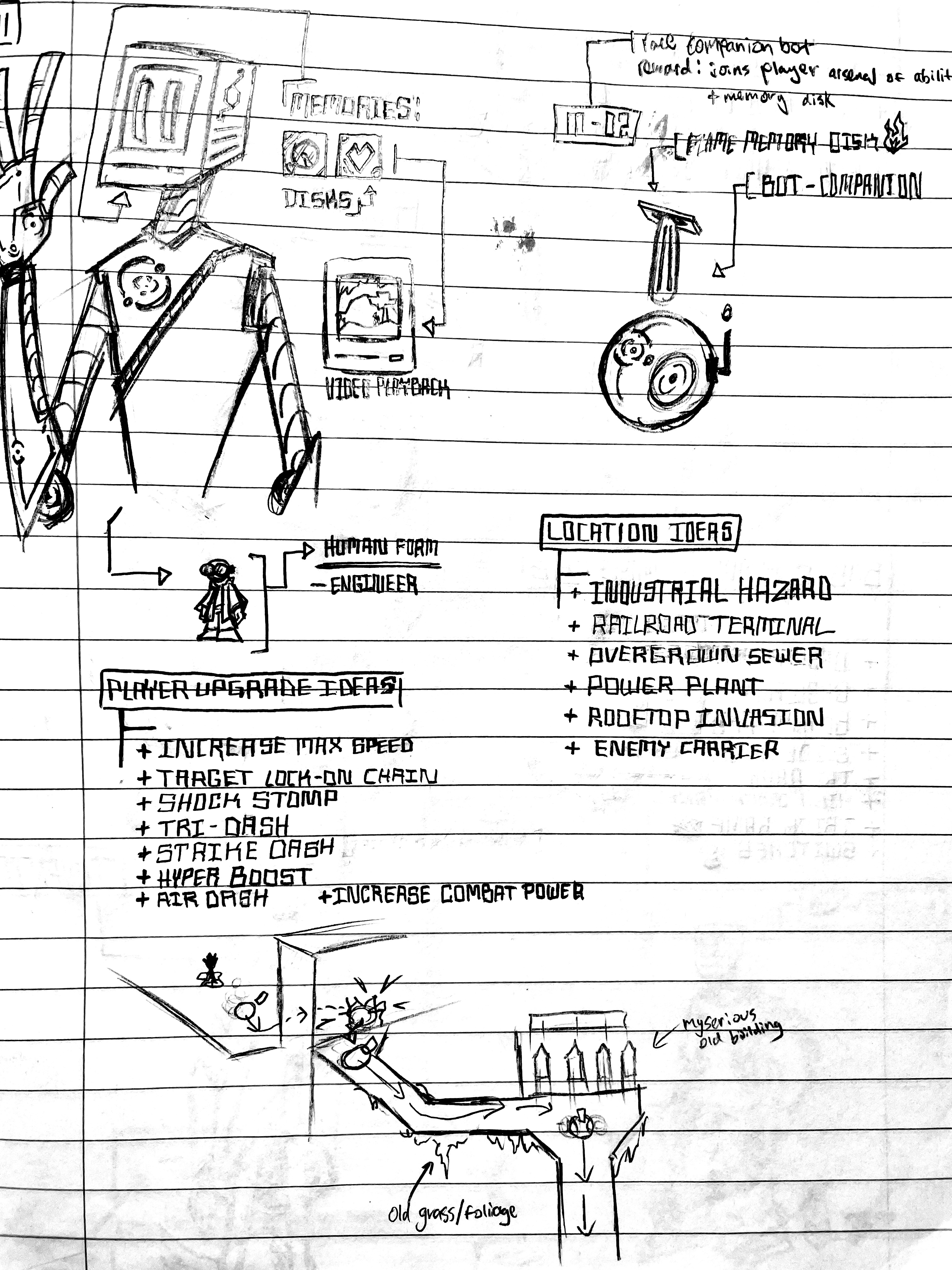
Character, Mechanics, Location Brainstorming Sketches
While performing fast-paced acrobatics I want players to feel powerful and stylish. I'm achieving this by focusing on strong sharp geometric shapes with a 2000s futurism aesthetic. I put emphasis on a strong character silhouete which is how I landed on the character's current design. I chose a vibrant lime green color as the game's primary color ascociated only with player related mechanics and UI, while red is ascociated with enemies and hazards. I do this to create overall strong visual cohesion and signals for players to know what's safe and what's not.
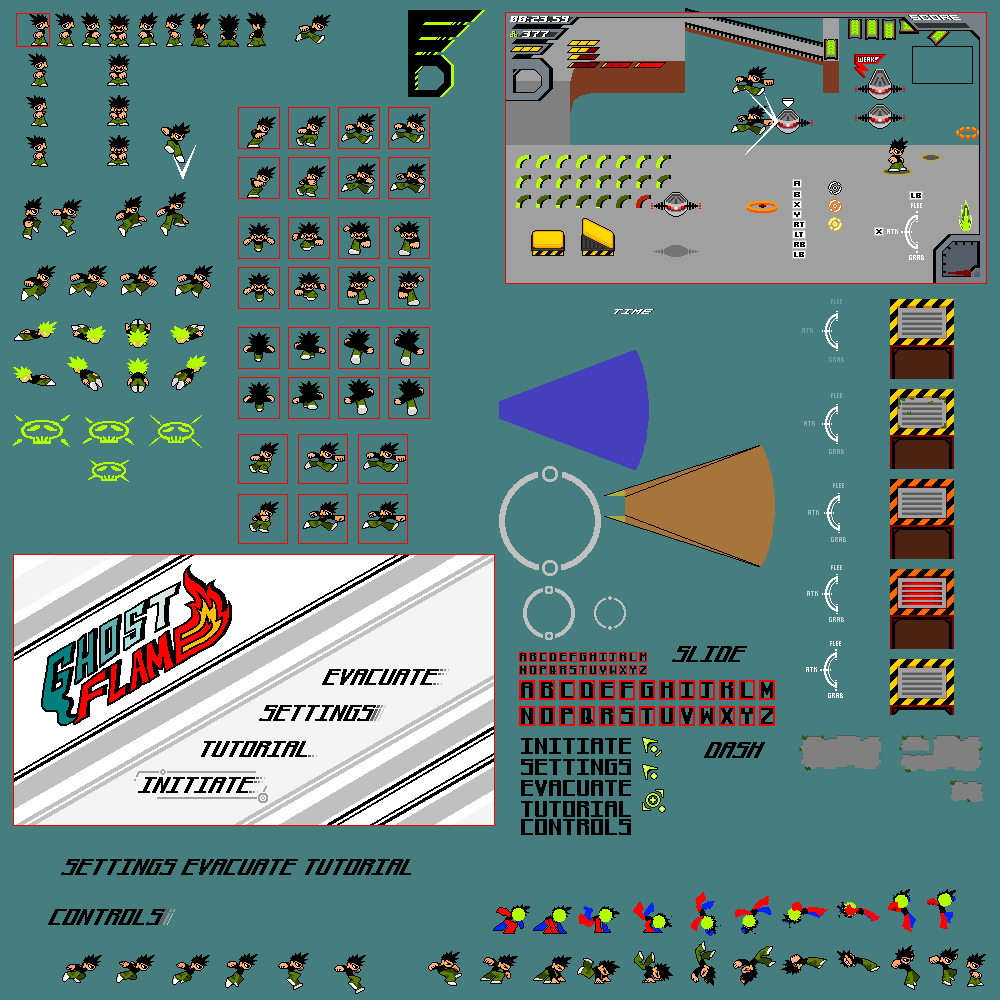
sprite work: character sheet & UI brainstorming
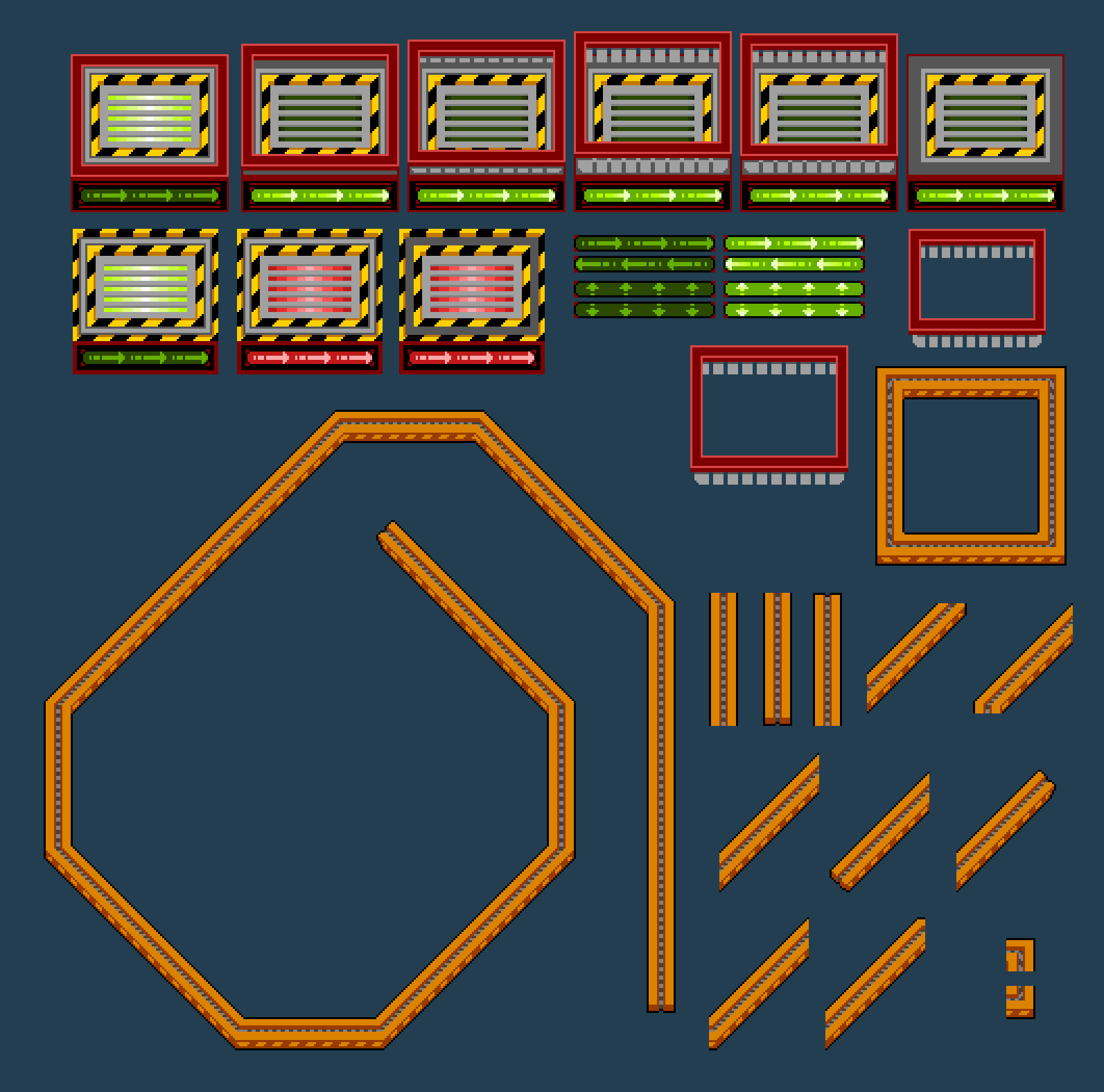
sprite work: zip-lock platforms & hookrails
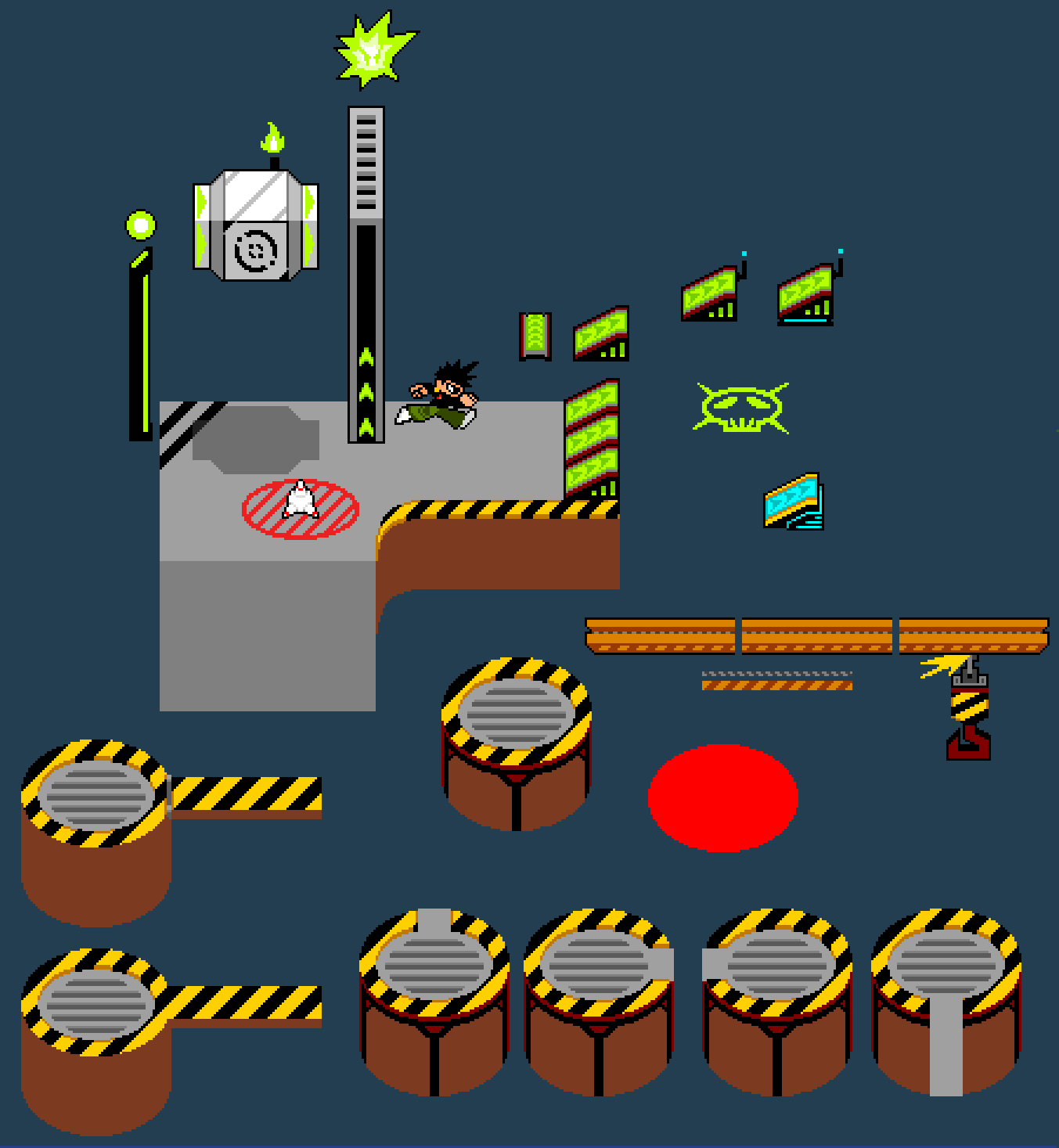
sprite work: various stage gimmicks & platforms
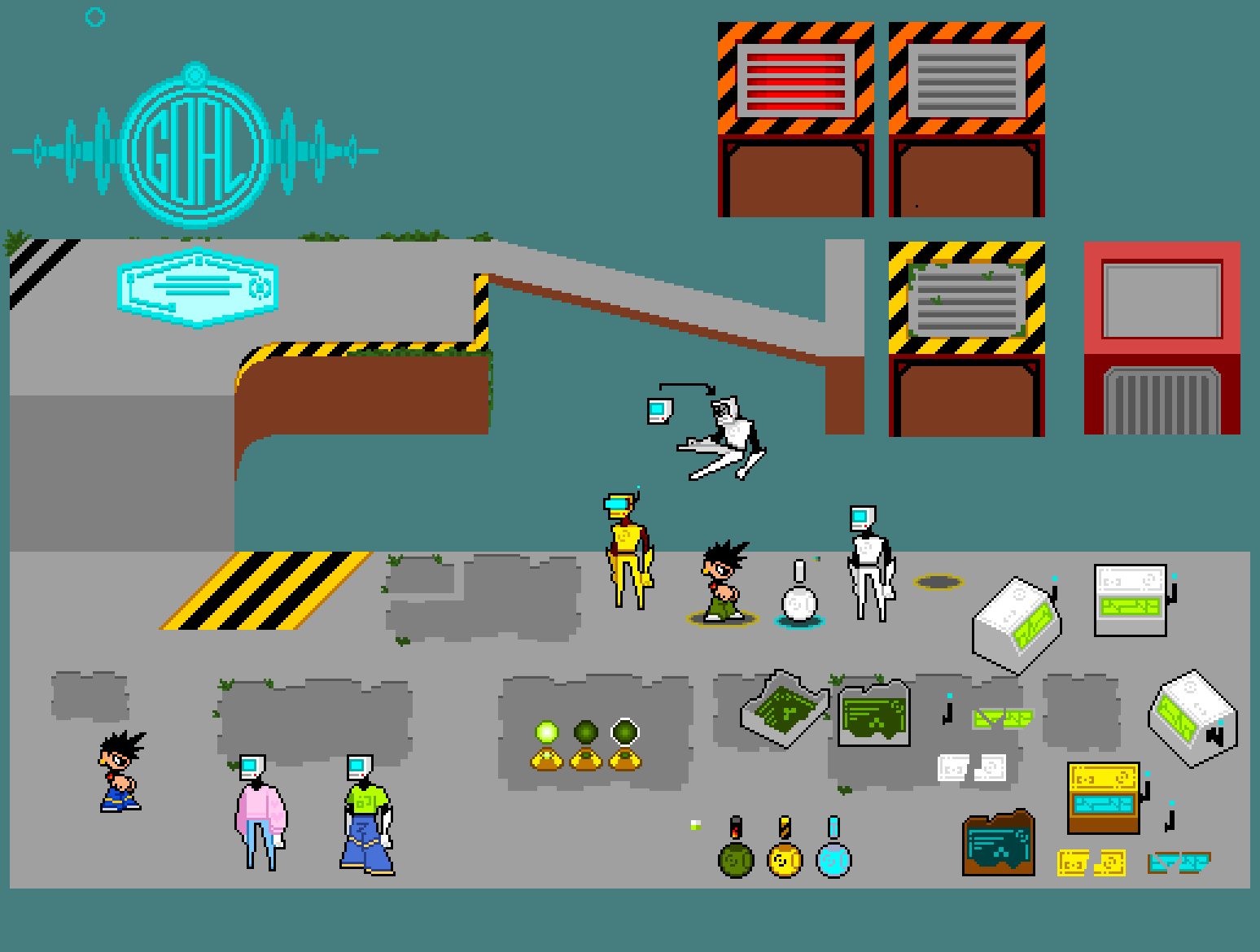
sprite work: environmental, NPCs, platforms, and crates
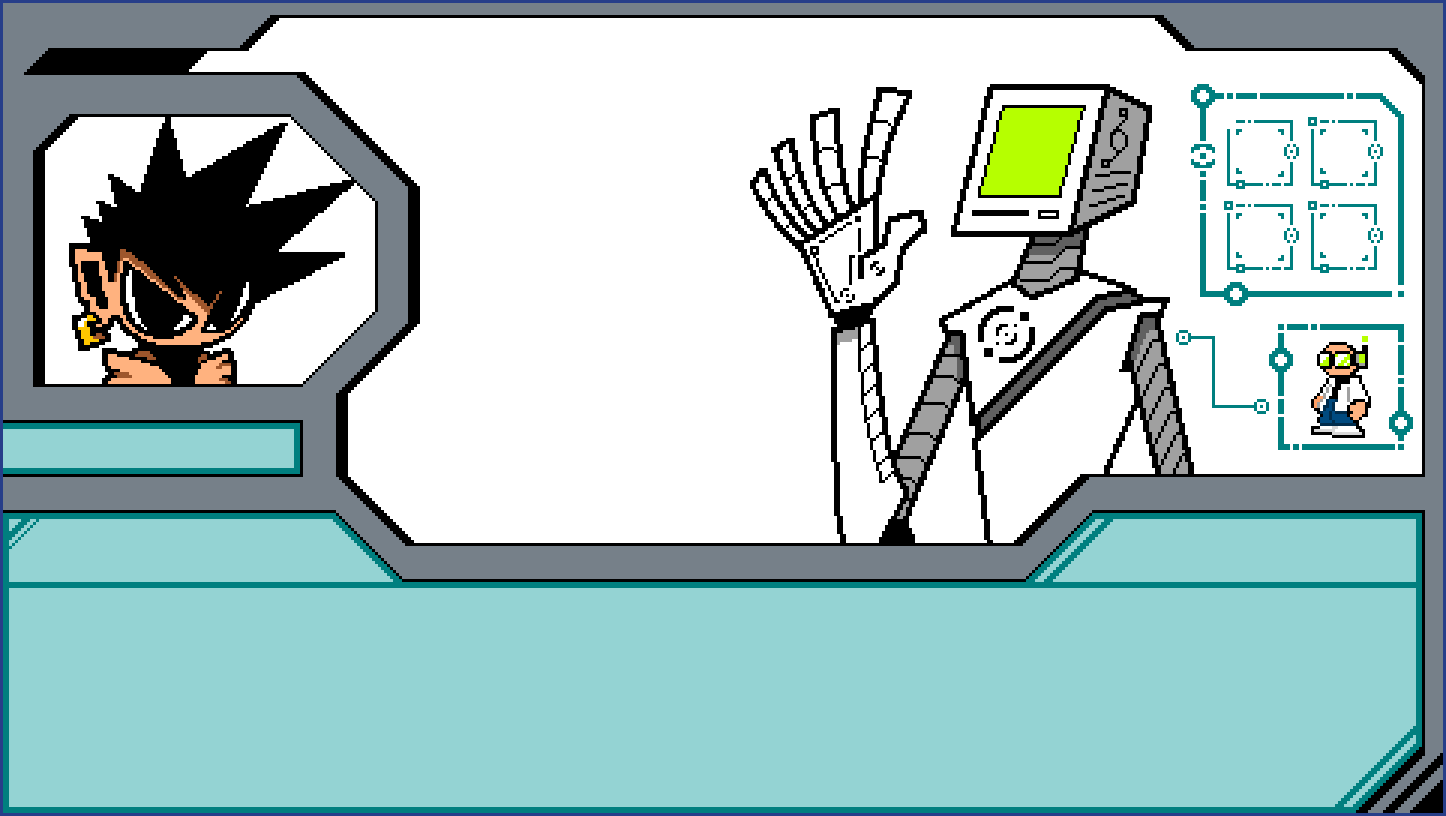
sprite work: UI during NPC interaction
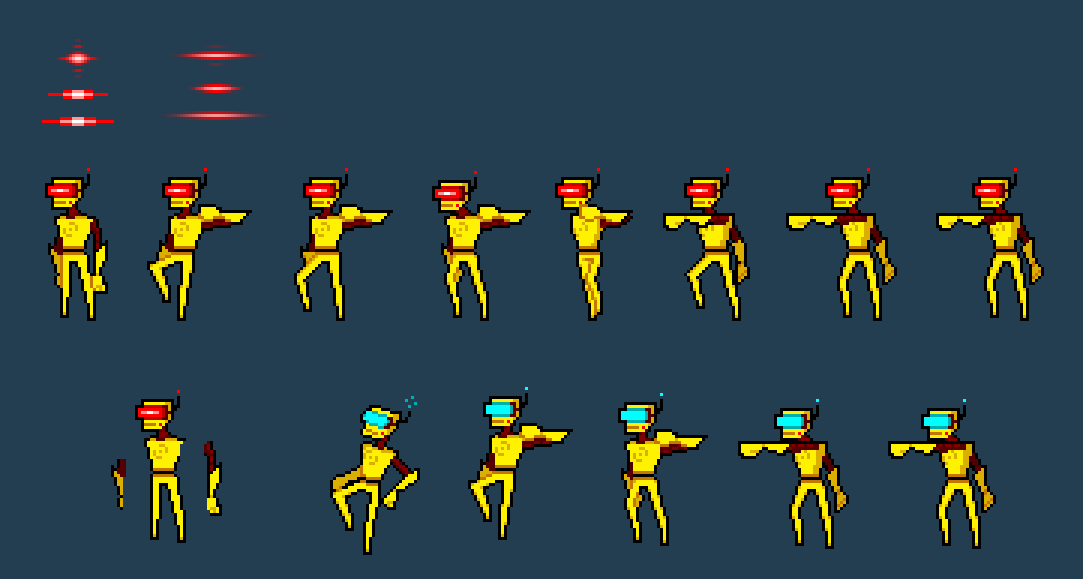
sprite work: enemy attack & stun sheet